Open A New Account In Five Easy Steps!

VCNB has made some big changes to how customers open accounts on our website. We are pleased to say that the online account opening process has been streamlined to just five easy steps!

It’s easier and quicker so you can open that new account and be on your way without a hassle.

We also have introduced a new promotion for Rewards Checking for folks who open online or in any of our seventeen branch locations.  Customers who qualify for a Platinum Visa® card in any of our locations will receive a bonus through this promotion as well.

If you aren’t familiar with Rewards Checking, this account rewards customers for using bank products including their debit card for purchases. Points can be redeemed for cash back, gift cards, travel, experience tickets, merchandise and more! To read all about Rewards Checking including the ways you can earn points, account terms and more, click here to visit our website.

Combining Rewards Checking with a VCNB Platinum Visa provides more ways to earn even more points!

Want to learn more about our current offer? Click here.

Visit us online to get started with opening your new Rewards Checking or other VCNB account in just five easy steps!!!

What to Do With Your New Raise

Did you get a raise in 2015? According to PayScale’s annual Compensation Best Practices survey, more than 85% of large and medium-size companies gave raises that year. In 2010, only 30% of companies gave their employees a pay boost, the lowest percentage since PayScale began its survey. So raises are on the rise.

If you got one or are expecting to get one this year, what will you do with it? Here are five smart moves for that additional money.

Pay off debts
Eliminating debt and reducing the money you pay in interest should be the first step. Say your raise was $5,000 and you’re paid twice a month. You’ll be earning an additional $200 before taxes each pay period. If you earmark $300 for your credit card debt each month, you’ll pay it off faster, save on interest, improve your debt-to-credit ratio and raise your credit score.

Build your emergency fund
Now that your credit card debt is paid off, it’s time to build up your emergency fund so that when stuff happens, such as major medical expenses or unexpected job loss, you don’t have to run up your credit card bill. Financial experts say a good emergency fund should cover between three and six months of living expenses. If you normally spend $2,500 a month, you would want build up about $15,000 for a six-month emergency fund.

Because an emergency can strike at any time, having quick access to your cash is crucial. Savings accounts are a good choice because they’re low-risk investments that allow you to withdraw your money without hassle. This emergency stash should be a separate account from one you use daily so that you’re not tempted to dip into your reserves.

Community banks, such as VCNB, offer several types of savings accounts that can suit consumers’ specific financial needs.

Invest for your retirement
Concern about having enough money for retirement is the No. 1 personal finance worry for Americans, according to Gallup’s annual Economy and Personal Finance survey. Don’t be part of that crowd. If the company you work for offers a 401(k) with an employer match, be sure that you’re contributing enough to get the maximum match that’s offered. The money you contribute will reduce your current tax burden, and the match that your employer provides is essentially free additional retirement income for you. Then, consider using the remainder of your salary increase to open an Individual Retirement Account for your future. Along with assuring you a more comfortable retirement, IRAs can also offer you tax benefits.

Give to charity
If you’ve ever thought, “I’d give more to charity if I had more money,” well, now you do. You could make a donation to a charity, your alma mater or a good cause. You’ll feel good about helping others and, as long as it’s a qualified charity, you’ll be able to deduct your donation from that year’s income tax.

Live a little
Treat yourself to something fun to celebrate your raise. After all, you earned it. Dinner at a special restaurant or a relaxing day at a spa won’t eat up all your new income. Just remember that your raise isn’t a lump-sum bonus: It’s coming paycheck by paycheck, and you should invest or spend it that way.

Ellen Cannon, NerdWallet

© Copyright 2016 NerdWallet, Inc. All Rights Reserved


Preparing For Unexpected Expenses

Studies show that the majority of American households don’t have enough money in their rainy day fund to cover an unexpected expense.

It’s a fact of life. Emergencies pop up, things break and life costs more than you think it should. That’s why it’s important to be prepared. You can’t prepare for every possible emergency but stashing away a few dollars every paycheck can help.

Some expenses are truly unforeseen like a car accident, death or health problem. However, there are some that you may see coming. It’s a good idea to look around your home and consider the state of your possessions. Is your furnace starting to make a noise? Are the tires on your car showing their age? How old is that refrigerator anyway?

These things are all expensive to replace or repair but are imperative to have.  You can’t survive the winter without heat in your home. You require some way to keep your food cold or frozen so you have to act quickly when the fridge dies.

Make a list or at least a mental note of what could go wrong and add up the costs. The total will probably scare you but might provide some tangible reasons to start saving for emergencies.

Now stop and think about how much you can save each paycheck or each month. If you can stash $100 a month, you would have $1,200 saved in a year. Can’t save that much? That bonus at work or tax refund could go a long way toward padding your emergency fund and securing your budget in a crisis. Put away what you can and try to remember that this money shouldn’t be touched for anything less than an emergency.

Just a reminder: a Passbook Savings account at VCNB is a convenient place to save. If you have a checking account as well, it’s easy to transfer funds between accounts or even automate your savings with automatic transfers from your checking to savings.

If you have to take from your emergency fund, be sure to replace the money as soon as you can and continue building that safety net for future problems.

Want to read more about the reasons you need an emergency fund? Click here.   

Small Business Spotlight: Sundowner Aviation

Being a small business owner is a tough job. That’s why we spotlight a different business each month to help you learn about unique businesses in your own back yard.

OLYMPUS DIGITAL CAMERA

Lonnie Watts and Pat Rooney pose with a plane at the Fairfield County Airport. They operate Sundowner Aviation, a flight school based at the airport.

If you have dreamed of following in the footsteps of America’s great aviators, there is a business in Lancaster that can help. Sundowner Aviation is a flight school based at the Fairfield County Airport that can make your dream of flying a reality.

For some, becoming a student here is a step toward a career in aviation. Others are crossing a dream off their bucket list or just doing it for fun. Regardless of the student’s intent, the instructors at Sundowner are happy to teach others to do something they personally love.

Lonnie Watts and Chief Pilot Pat Rooney recently talked aviation and gave VCNB a tour of their facilities. “The flying community is less than one percent of the population of the United States. You might say it’s an elite club because when you get your license it’s earned, not given and it’s for a lifetime,” Lonnie explained.  “Anyone who tries it usually can’t get enough.”

They will celebrate their fourth year in business this June, offering lessons, plane rental and even maintenance services. In 2013, they took over the management of the airport as well. Pat said the company was founded as a means to support a hobby. It wasn’t until the business had taken flight, so to speak, that they could see the 10,000 foot view: a flight school was a much needed service in the community.  “It’s costly to store a plane so we decided to start teaching to offset the costs. Then we found out that people really needed us and it got a lot bigger than we thought it would ever be,” Rooney recalled.

The flight school began in a 50×50 foot hangar that doubled as a classroom.  It truly got off the ground when they took over airport management. “We started with two airplanes and now we have six. We can give you almost any license you want and we offer maintenance. Not a lot of people do that,” Pat explained. “We’ve had people come from all over – from Kentucky, Ohio – we’ve had them from Tennessee, Texas and even a guy from China. There just aren’t a lot of flight schools around.”

Pat began flying with the United States Air Force in 1973. In the 43 years since, it seems that he has done and seen everything. He served the Air Force for 25 years, spending more than 17 years as an instructor. He served three years as a B-52G Aircraft Commander based in Barksdale AFB, Louisiana. After the Air Force, Pat flew the Boeing 737, 757 and 767 on international routes for a major airline.

His eyes sparkled when asked what it is like to fly. “It depends on what plane you’re flying. The super sonic? It’s great fun to have all that power and speed,” he laughed. “But take a beautiful, clear day and you can see forever. On a clear, cold winter night, cruising along at 30,000 feet, the stars are like diamonds.”

Describing the clouds as “cathedrals in the sky,” he concluded “there’s a lot of magic in it.”

Lonnie has been flying for twenty years and said it was a lifelong dream. “I’ve been obsessed with planes and flying since I was a little kid,” he said while explaining that a lot of their students also consider flying a lifelong dream. “I went up once and was head over heels for it forever.”

The school tends to have fifty to sixty students at a time. The average age, according to Pat, is late thirties to mid-forties but they currently have a student who is 15 and another who is 82. Before committing to flight school, individuals can take what they call a “Discovery Flight” which allows them to see what flying is like and to even take the controls.

Hours in the cockpit and in a simulator give students ample time to learn the skill. Plus they are required to understand the plane. “Knowledge is power,” Pat said. “You have to know the rules of the road, you have to know how instruments works, how planes fly. You need to know about aeronautics. You have to know things inside out. Remember, if something goes wrong when you’re driving a car, you just pull off the side of the road. If things go wrong up there,” motioning upward, “you have to know what to do.”

Visitors to the airport terminal will notice some interesting things. “When someone completes their solo, we cut off their shirt tale. They sign it and we hang them up around the room,” Pat explained. “Then when they earn their license, they visit the lemonade stand.”

The lemonade stand is a slightly damaged propeller, displayed on a wooden stand that features countless signatures from students who are invited to sign the propeller after receiving their license.

The Airport Pilots Association periodically hosts events for the public including movie nights and cookouts. Many events feature a Young Eagle component where kids 7-17 are introduced to aviation for free. “It’s good for the airport and it’s good for everyone to invite the community in and give them a chance to interact with the pilots and have a little fun,” Lonnie explained.

Discovery Flights are available year round and gift certificates can be purchased. For more information on Sundowner Aviation, the Fairfield County Airport, or upcoming events, find them online at www.sundowneraviation.com or call 740.475.8188.

See below for more pictures from our visit to Sundowner Aviation.


VCNB: We’re The Bank For You

Construction - FBBC (Nauman Digital)

Doug DeLong

Doug DeLong is a Lender at the Salt Creek Banking Center in Laurelville

If you’ve seen one of our billboards or heard our current radio spot, you know we say that if you want to redo your home or build new, we’re the bank for you. We hear from countless customers that building a home with VCNB financing is easy or that they love our Home Equity Line of Credit. So we chatted with one of our lenders to find out what he believes our customers like best about financing these types of projects with us.

Doug DeLong is a Loan Officer in our Salt Creek Banking Center in Laurelville. He has worked in this office for thirteen years and is a favorite among customers around Laurelville. He expressed excitement about the construction and home equity loan specials VCNB is currently offering. “There are many things that set our bank apart, and these products are at the top of the list,” DeLong said.

Building a home can be an intimidating process for the customer but DeLong said he works to make the financing part as easy as possible. “We pride ourselves on being available to the customer and their contractor for communication during the important building process,” he said. “Frequent communication is necessary. We inspect the home each time a contractor requests a draw from the loan. We also speak to the customer before releasing the funds to the contractor to make sure the customer is happy with the work thus far.”

One thing that sets apart VCNB from many other banks is the turnaround time for loan draws. “There are typically no cumbersome delays in the draw process, as there are at many of the larger banks. Quite often, we can have an inspection done on a home and have the draw disbursed the same day! I doubt this is ever the case at the large banking institutions,” DeLong ventured. “We make it a priority to be prompt, knowing how important it is to the customer.”

He indicated there are many advantages when it comes to the VCNB Home Equity Line of Credit as well. “No closing costs is one big plus.* The rates and easy ability to access your money are others. And, as always, the great customer service continues to set us apart.”

VCNB does have a HELOC special that makes this project even more rewarding for the customer at this time. Click here to read about the special which expires May 15, 2016.

DeLong expressed how easy it to is love his job when he feels like the customer comes first and the loan products are good for the customer. “I like seeing dreams come true for my customers. A new home is one of the biggest dreams people have in life – it’s rewarding being involved in that process. These are just a few reasons I am proud to work at VCNB, a bank that truly cares about our customers’ well-being!”

*There are no closing costs unless the amount of the loan is over $100,000. Borrowers will be assessed fees for title, insurance and survey. If the loan is closed within three years, borrower will be assessed a $500 fee.

Twin Oak Forest Products Finds Balance Between Domestic and International Sales

This slideshow requires JavaScript.


The following appeared in the 2015 annual report for VCNB’s parent company Community Bancshares, Inc.(CBI). We thought our blog readers would enjoy learning about this homegrown local business.

When Randy and Polly Young started Young’s Logging, their daughter Marcie was just three and son Hunter was only six months old. That was in 1980 and the business, like their kids, is all grown up.

Today they operate as Twin Oak Forest Products. Since recently consolidating locations to one large, scenic spot on Pumpkin Ridge in Vinton County, they seem to have hit their stride.

Twin Oak is a multifaceted operation that offers an impressive variety of products appealing to a retail customer and to commercial buyers who come from across the region and even across the world to take advantage of their superior products and services.

VCNB visited with the family on a snowy February day and learned the story of how the business came to be what it is today. Randy, who has a degree in Forestry from Hocking College, explained that he began his career working as a log buyer for other companies. “In 1980, I opened my business because I had reached my peak with the company I was with at the time,” Randy noted.

Polly added that they bought their first dozer at 24% interest and set out hoping to do well enough they could make the payments. Fast forward 14 years and the company had not only survived, they were growing. In 1994, the company began sawmilling and was able to  expand their product line.

Today the company employs seventeen people including Polly, who does the bookkeeping, and Hunter who is very much following in his father’s footsteps. “He and Marcie used to ride in the log truck with me,” Randy laughed as the pair reminisced about their children and the business. “Hunter worked every summer from the time he was fourteen,” Polly said. “He went to school for Forestry and graduated in 2000.”

On the logging side of the business, Twin Oak exports logs to countries across the globe including Malaysia, Indonesia, Spain and beyond. “We work with a broker on some and do some of the deals ourselves,” Randy said. “There’s a German customer here today and Japanese customers coming in.”

When asked if cultural differences cause challenges in international business, Randy explained that it hasn’t made a difference. “We’ve worked with them long enough, we know what they want so it hasn’t been a problem,” he added.

On the lumber side of business, they sell a lot domestically and continue to grow in that area. This lumber can have many uses but is typically used for furniture and cabinetry. “Probably eighty percent of it goes to neighboring states. Pennsylvania, West Virginia,Kentucky and here in Ohio,” Randy said. “A smaller percentage goes south to places like North Carolina and Tennessee.”

He noted they also sell a lot to a company in Newark, Ohio where the veneer log is sliced and is often sold internationally.Twin Oak offers a number of finished products that are sold to customers in Southern Ohio too.

Wood flooring and paneling are popular items. “They can come in to choose their paneling and their flooring. The paneling is so popular we try to keep it in stock,” Randy said. They are also known for log cabin kits and timber framing. Randy said they can provide kits and materials for everything from a garden shed to an elaborate dream home.

In addition, the company sells grade lumber and railroad ties. They also buy timber and typically have two or three contract crews in the woods at one time.
Randy commented on the ever changing American economy and the boost his business has experienced by expanding to international dealings. “It’s definitely a world economy, it’s not just us in this country now,” he said. “We’d certainly be lost without the international economy.”

Randy and Polly were also complimentary of their relationship with Vinton County National Bank. “It’s been a good relationship. The bank has stood with us through thick and thin, the good days and the bad days. And there certainly have been some bad days,” Randy said. “We’ve been with you since we started out in 1980.”

When they aren’t busy with their business, Randy and Polly enjoy spending time with their family including five grandchildren who are their pride and joy.

One of the most rewarding things about community banking is getting
to know customers. We are proud of the hard working Young family and Twin Oak Forest Products!

Tax Tips to Help New Parents Save Money

Congratulations, new mom or dad! Now take out the checkbook, because your bundle of joy comes with a bundle of new expenses. But all those day care costs and pediatrician bills can bring new tax deductions that can help you ride out the first years of parenthood without going broke.

Here are the major ways your tax situation may change now that you’re a parent.

Child tax credit

This credit is worth up to $1,000, and you can claim it if you have a dependent child living with you who is under age 17. There are income limits that start phasing out this benefit at $110,000 for couples, according to criteria on the Internal Revenue Service website.

Child care credit

If you pay for someone else to look after your child who is under age 13 while you work or look for work, you may qualify for a child care credit of $600 to $1,050 on as much as $3,000 in costs, depending on your taxable income. The care provider can’t be a spouse, and there are other qualifying rules.

Earned income tax credit

You don’t need a kid to get this credit, but when a couple has a child, they can have a much higher income before being disqualified. For example, a married couple’s 2015 taxable income can’t top $20,330 to qualify, but that limit rises to $44,651 when they add a child to the family. The limits increase for families with more children. The credit can be as much as $3,359 for a couple with one child.

Health care expenses

Paying for health care may affect your tax bill in a few ways. First, 2014 was the first year in which taxpayers had to document that they had adequate health insurance for themselves and any dependents or face a penalty. Also, if you added your newborn to your workplace health insurance plan, you may be paying higher premiums than you did before. Since the costs are deducted from your pretax pay, your taxable income may come down. If you pay significant medical expenses out of pocket, they have to exceed 10% of taxable income before they’re deductible — and even then you must itemize your deductions to claim them and cut your taxes.

Parenthood is rewarding — and it may also help you out at tax time. A tax advisor can help you learn more about how parenthood affects what you owe Uncle Sam. The savings may take the sting out of the child-induced increase in your expenses.

© Copyright 2016 NerdWallet, Inc. All Rights Reserved

Lending A Helping Paw

Humane Society Autumn with donation

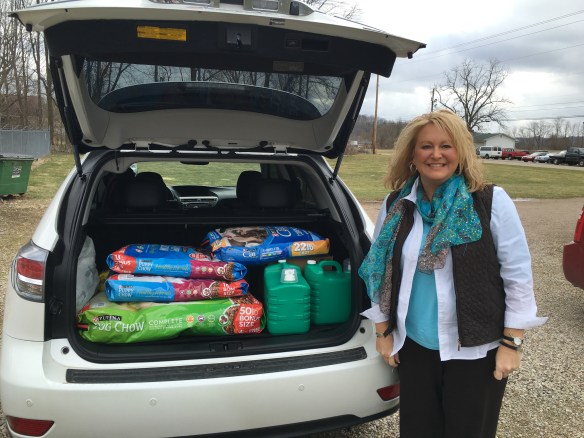
Hocking Hills Banking Center Manager Autumn Warthman poses with some items the bank recently donated to the Hocking County Humane Society.

Last month we asked VCNB employees to submit pictures of their pets to be posted on our Facebook page for Love Your Pet Day. We learned that many of our employees are devoted pet parents who love to talk pets. That started a conversation at our Hocking Hills Banking Center about an organization in Hocking County that could use a helping hand and we decided to get involved.

Branch Manager Autumn Warthman explained that the Hocking County Humane Society is in constant need of donations and that her staff wanted to call attention to the need. “Two of our employees have adopted dogs from the Humane Society and three of them volunteer there,” Warthman said. “Grace, Tammy and Julie all volunteer there every week and they know the need better than anyone.”

The Humane Society accepts only abused and neglected animals and takes practically any kind of animal that needs rescue. Right now they are home to dogs, cats, bunnies, goats and horses. They do not accept strays or surrendered animals.

Operated locally by a volunteer staff, this non-profit organization accepts donations of time, money and supplies. Warthman said the bank recently donated a carload of food and supplies and is inviting customers to donate items as well. She said they will have a donation area inside the bank from now through June. “If they want to make a donation, no matter how big or small, they can just bring it into the bank and we’ll deliver it to the Humane Society.

“Most of our employees are animal lovers and we feel compelled to help the Humane Society help these neglected and abused animals. It’s heartbreaking when you think about it. The Humane Society does a great job helping every animal they can but their resources are stretched thin. It’s expensive to keep them all fed and under roof and we just want to help,” Warthman said.

Donations will be accepted during regular bank business hours through the end of June. Bank staff will regularly deliver donations to the Humane Society. To learn more about the Humane Society or to get involved, call them at 740.380.9109 or visit 36960 Hocking Dr., Logan.

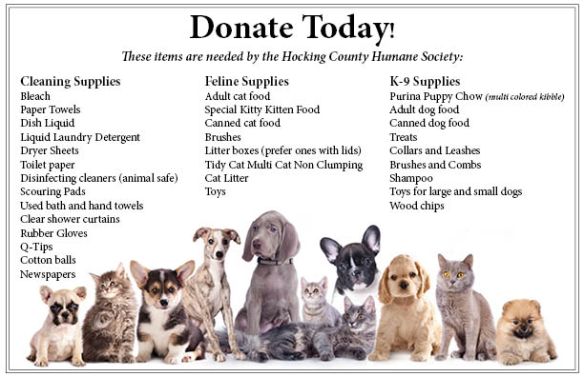
See below for a list of items the Humane Society needs at this time.

Hocking County Humane Society Donation List


How to Get Out From Under Student Loans

If you’re a recent college graduate who took out student loans, you likely owe about $35,000. As eye-popping as that average debt figure is, you’re certainly not the only one wondering how you’ll possibly get out from under your loans. As with any difficult assignment, though, research and a well-thought-out plan will help you tackle even the most challenging of debt situations.

Making use of the following strategies will help you dig your way out of student debt. Here’s a look at where to get started.

Know what you owe

First things first: Figure out what your monthly payments should be. To do that, use one of a handful of repayment calculators. These tools let you plug in the total amount that you owe along with your loans’ interest rates and term lengths. You’ll get a better sense of how much you should be paying each month if you want to take care of your debt within a certain amount of time.

Adjust your monthly budget accordingly

Knowing how much money you’ll need to put toward eliminating your student debt each month will help you adjust your budget. That may mean making tough decisions like cutting back on nonessential expenses.

Remember: Every extra dollar you put toward your debt reduces the total amount of interest you’ll end up paying over the life of your loan, so it’s well worth the effort.

Consider automatic payments

To ensure that you make your monthly payments on time, set up automatic deductions from your checking account. The way it works is easy: Your student loan servicer simply subtracts what you owe from your account whenever your payment is due. Your lender may even offer you a discount if you choose this option, which can be much more convenient than writing and sending a check every month. Just be sure that there’s enough money in your checking account so that you aren’t hit with overdraft fees.

Switch up your repayment plan

If you’re still struggling to put money toward your student debt, consider changing your repayment plan on federal loans, which you can do whenever you want. You may, for example, opt to switch from standard repayments —which have you contributing a set amount each month over a period of about 10 years — to graduated repayment, which is when your payments start out lower and increase over time.

Extended repayments, on the other hand, give you additional time to pay back your loans, sometimes up to 25 years, if your debt is more than $30,000 and you meet certain other requirements. Other plans, aimed at borrowers whose federal student loan debt is high relative to their income and family size, are income-based. If you qualify, the payments you owe are based on how much you earn every year. Although any of these plans can ease your monthly payment, you’ll end up paying more for your loan over time than you would if you had stuck with the standard 10-year plan.

Private lenders typically have stricter policies, but it’s still worth checking to see whether there’s any way to adjust your repayment plan with them.

Final word

If you’re a teacher or a public servant, you may qualify for student loan forgiveness. Otherwise, your last resort may be opting for forbearance, which means you can stop or reduce payments for a month or two. However, because interest continues to accrue, this course of action is better avoided.

With all that said, what you definitely don’t want to do is default on your loans. When you do that, the entire unpaid balance of your loan is due immediately, and you also lose the right to defer or change your repayment plan.

Breaking down the repayment process into smaller steps will make your student debt feel less overwhelming. Although it may take several years to wipe it out completely, a carefully crafted plan will set you up for success down the road.

© Copyright 2016 NerdWallet, Inc. All Rights Reserved

Ask A Lender: What Is A HELOC?

We introduced a new HELOC special earlier this week and it occurred to us that while bankers like to talk in abbreviations, everyone may not know about a HELOC and what it means. So we asked Cassie Stout to help us out and explain a HELOC. Cassie is the Manager of the Ross County Banking Center on E. Main Street in Chillicothe. As a Retail Banker, she is able to address all of a customer’s needs including help with loans and deposits. She has been with us since 2006 and is a popular fixture at our Ross Main Office.

Cassie Stout

Cassie Stout

Here’s what she had to say:

What is a HELOC?
HELOC stands for Home Equity Line of Credit and is a way to turn the equity in your home into cash.

Why would someone want or need a HELOC?
HELOCs are great for home improvement projects like kitchen and bath renovations, a new garage, or really any upgrade. A HELOC is also good to have if you need cash out for debt consolidation or to fund big life expenses like college or special occasions.

What are the costs related to a HELOC at VCNB?
We offer HELOCs with little to no upfront (closing) costs, and also waive the annual fee for the first year! After that, the annual fee is just $50*.

Why should someone apply for a HELOC at VCNB?
VCNB HELOCs are a great deal for many reasons. The application process is easy, plus we have great rates and low fees.

What do you wish customers knew about a HELOC that they don’t think to ask?
When you open a HELOC with us, you get great payment flexibility for a full fifteen years. That means you can pay just your interest or pay off more at any time. This is a good setup for my borrowers because they can use their HELOC for their initial purpose (like home renovations), but can then have the security of an available credit line for many years to come.

Learn about our current special at our website!

*A Home Equity Line of Credit in an amount over 100,000 will require title insurance and survey fees to be paid.