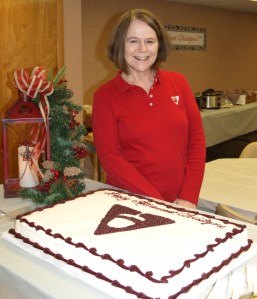
Small Business Spotlight: Great Escapes Travel

Being a small business owner is a tough job. That’s why we spotlight a different business each month to help you learn about unique businesses in your own back yard.

In the age of self service and online travel booking sites, many Americans may not think to consult a travel agency for their next vacation. However, there’s one travel agent in Logan who says business is thriving and that her services are as needed today as ever. Great Escapes Travel owner Tracey Adams is a 33-year veteran of the business who says above-and-beyond customer service keeps clients coming back trip after trip.

“Even though people can book online, you would be surprised to know how many people feel more comfortable booking a trip with me,” Adams said. “I can take someone’s vacation savings and turn it into the trip of their dreams. Even if they vacation every year, I want them to come home feeling like it was a once-in-a-lifetime thing.”

ParisFrom Disney trips and Caribbean cruises to international journeys to far flung places, Adams can send a client anywhere in the world they want to go. The real value though is that she provides not just the standard flight, room and car rental, she plans and sees to every step of their journey. “From the minute they leave their home until they return, I take care of everything. Flights, transfers, cancellations, online check-in, hotels, cars, research. You name it and I do it because I want to make it as easy and convenient as possible for my client,” she explained. “It’s a service that my clients have grown to expect. Not every agency will do all that but I think personal service is important.”

The demographic of her client base is broad, including people of all ages and backgrounds. She cites stories of trips she has planned for both young and old, families, couples, friends and singles as well as travelers from all backgrounds. She said that most of her clients are repeat customers, making it easier to recommend destinations and activities because she is familiar with their likes and dislikes.

What are some reasons a traveler might find a travel agent like Adams helpful? The list is long, she says. One important reason relates to experience and knowledge. “Either by research or by first hand experience I am familiar with your destination. I’ve been doing this for 33 years so I can tell you what to see and what to avoid. I know when you’re actually getting a good deal and what you need to do before you leave,” she said. She went on to discuss how so many international travelers aren’t sure about how to get a passport, what inoculations they might need or what to pack. “I do all the research and I take care of you.  I can look after you if a flight is cancelled and be there for you every step of the way.

When considering her favorite destinations, she mentioned Disney because there are so many customizable options and because it is incredibly popular with people of all ages. Her absolute favorite trip though is Alaska. “It’s the most amazing place I’ve ever seen in my life. The people are so nice and the air is clean. The ice, the whales, the eagles are amazing in person,” she gushed.

Another favorite is the Caribbean where she not only sends countless clients every year but where she leads an annual trip. This year’s seven day Carnival Western Caribbean trip will be Oct. 1 through Oct. 8 and bookings are still available. Ports of call for this trip include Costa Maya, Isla Roatan, Belize and Cozumel. “This is a huge group from Logan and the surrounding area and we have a blast,” she said with a laugh. “Cruises are great for families and for people who aren’t sure they really want to travel. Men especially are the hardest to get on a cruise but they’re the first to come back and book another because they have the best time.”

To learn more about Great Escapes Travel and how they can help you plan your next trip, call 740.385.1999 and follow them on Facebook. They are located at 60 N. Mulberry St. in Logan.

See below for a few more pictures from Great Escapes Travel!

This slideshow requires JavaScript.

Love Your Pet Day

It’s Love Your Pet Day and we wanted to show off some pets from the VCNB Family! If you can handle the cuteness, we encourage you to scroll through and admire pictures of pets submitted by our employees. You will note that we have a lot of traditional pets and a few that aren’t so traditional! Enjoy!

This slideshow requires JavaScript.

Making Change With Change

Could you spare a quarter today? How about tomorrow? Most of us wouldn’t miss a quarter every day but it could have a life-changing effect for one local non-profit organization. Shepherd’s House is in dire need of a larger, more efficient shelter and is asking people to help them save for a shelter with just 25 cents a day.

Shepherd’s House is a domestic violence and sexual assault shelter and advocacy center in Vinton County. The organization began helping clients in 1999, initially offering advocacy services and growing to include an emergency shelter.

Shepherd's House Quarter Challenge 2016

Shepherd’s House Board Member Tami Case-Collins is pictured with Jane Nickels, Branch Manger of our McArthur Office.

Statistics say that one in four women will experience domestic violence in her lifetime. More than three million children will witness domestic violence in their homes this year.  Surprisingly, one in seven men will be a victim of abuse. So while the shelter is available only to women and children, Shepherd’s House provides non-shelter assistance to men as well. Sands said the shock waves caused by this violence will echo far beyond the household of an abuser.

“These victims are our neighbors, our sisters and daughters. They’re our mothers. You wouldn’t believe the amount of elderly who are abused by grown children. Victims are many times the bullies who are hurting your children. They’re kids who often grow up to be abusers and they’re in the pool of people your children will be choosing friends and spouses from. You may not know it but domestic violence affects us all,” she warned.

Shepherd’s House has binders filled with the names of hundreds of known abusers in Vinton County – men, women and juveniles – a testament to the need for a larger shelter and more services in this community.

When a victim comes in, the staff works to assess their needs and offer whatever services are necessary “We give them time to calm down and realize what’s happened so they can make decisions. We guide them through the system and explain the services available to them. We explain legal terms and sit with them in the courtroom. We help them with emergency plans and talk to them about staying safe. We offer peer support in a safe, judgment free zone,” Sands explained. “The judicial system isn’t always fair in the eyes of the victims and we have to make it as least traumatic as possible for the client.”

While cozy and welcoming on the inside, the current shelter is simply too small to meet the demand. With cramped office space and small living quarters for just one family at a time, the organization needs a larger home to grow in.

“Our dream is to never have to turn someone away because of space. Our dream is to have enough employees to not have staff overworked and exhausted. The dream is to someday have transitional housing units for domestic violence victims so that they can have a few months to get on their feet. But right now the need is to just have three or four bedrooms with space for a little office,” Sands concluded.

Sands pointed out that this fundraiser is a great project for families with children. “I know a year is a long time but if people would teach their kids to help others, to every day spend five seconds thinking about someone else, that habit becomes an asset. These children will grow up to be more caring adults and their contribution will mean the world to us,” she said.

She admits that there is still a stigma associated with domestic violence. “People think that it can’t be that bad or she would leave. They think if she really wanted out she would just go. They think it’s not their business. But it isn’t that easy. You have no idea how hard it is, how devastating it is until you’re in that kind of danger. If you’ve never had someone threaten you or your children or even your family pet, you just don’t know how hard it is to escape,” she lamented.

Once victims do escape, they face an uphill battle with the logistics of daily life including employment, child care, acquiring the things they need, often with little or no credit of their own. They typically face the most basic struggle of simply keeping their children safe from their abuser and a roof over their heads, according to Sands. “It’s hard to believe but for some, it seems better to stay than to leave. That’s how little hope they have.”

When we heard about the quarter challenge, many of us here at VCNB felt compelled to help. That’s why we have placed large jars in the lunchrooms of our two McArthur offices, inviting employees to drop in a quarter a day or whatever they can spare. To kick off the campaign, the bank donated $365, the equivalent of four people doing the quarter challenge.

Sands said that they have already received donations from a few individuals who are skipping the quarter challenge and giving the equivalent now. Either way is fine with Sands and the organization’s Board of Directors. Checks for Shepherd’s House can be sent to P.O. Box 550, McArthur, Ohio 45651.

Follow Shepherd’s House on Facebook  or join in the Quarter Challenge.


Teaching Kids Lifelong Money Lessons

College Savings Pennies.jpg

We visit local elementary schools every spring for a project called “Teach Children To Save.” This is one of our favorite annual events because it gives us a chance to talk with youngsters and to help mold responsible financial citizens of the future.

It’s funny because these third graders have a pretty firm grasp on the difference between a need and a want as well as the importance of saving money. Inevitably several kids will raise their hands to tell us they are saving money for a car or college. Once we had a little boy tell us he’s saving for a wife “because they’re expensive.” We giggled but love the spirit behind his hard work.

On the other hand, we also talk with high school students and are surprised to learn how few are saving for anything. It’s a tough age, one where the expensive shoes are a necessity rather than a want and where there’s never enough money for all the socializing, gadgetry and new clothes they desire.  It’s hard to talk to older kids about saving money but it’s still something that parents need to do.

The best approach is to start when they’re young and to continue the dialogue as they grow. Even little kids have opportunity to earn money with chores or an allowance. Lots of times there are monetary gifts for holidays too. Begin by teaching them they can have fun with their money while saving a little too.

We once met a teen whose parents set her up with a savings system when she was a toddler:

10%        Tithing
10%        Retirement
10%        Car, college, house (in that order)
70%        Anything she wants

She’s an adult now who was able to buy her first car and contribute to her higher education. She continues with this savings system and has a better head start to retirement than a lot of older adults. She said her parents did not shelter her as a child but talked to her about some household expenses and why they save money.

One financial expert that we read suggested enlisting help from the grandparents. Instead of shopping for things, the grandparents send the kids each a check on their birthday. It’s for $100 plus their age. Everyone understands that it’s for saving, not spending and it has become a fun annual tradition that gives a big boost to the child’s savings account.

Another way to make savings fun for kids is to give them a short term goal for something like a coveted toy. Create a savings chart that helps them follow their progress. Achieving short term progress will encourage them to dig into long term goals as well.

Finally, remember they are still kids. Make them work for it to appreciate the value of a dollar through chores or an after school job. Consider incenting your kids by matching their savings. This will give them a boost while instilling an important life lesson.


Lessons from our grandparents

Two women knitting.jpg

Spending time with family over the holidays encouraged a lot of us to reminisce about the good old days. While some things may not have been better and going back in time isn’t possible, there are a number of things we all can learn from past generations. If you have grandparents who were a product of the Great Depression, you probably know they did things differently than younger generations.  Some of their skills and money management ideas are trendy today!

It’s the small things – Even a small thing can be a luxury and your grandparents will probably tell you there’s nothing better than an ice cream cone on a hot August day. Take time to enjoy the smell of cut grass, the sound of a baby’s laughter or the taste of a warm cookie fresh from the oven.

Keep your wants under control – Nothing kills a budget like a never ending list of wants. Worst of all, wants erode your satisfaction with what you already have.

Face to face is better than Facebook – They “went visiting.” They chatted with neighbors on the porch, they invited the pastor over for Sunday dinner and they didn’t stare at a tiny device in their hand every waking moment. They were good neighbors, recognizing that time and money are precious resources that could be used to help others in their community.

Save for a rainy day – Anyone who was a product of the Depression will tell you that you never know when a crisis will arise or how much money you’ll need to survive. That’s why a lot of these people were millionaires next door, secretly stashing away as much as possible but maintaining a simple way of life.

Two men and carpentry.jpgGrow your own food – A lot of our grandparents had gardens. Even in cities, folks with yards often grew backyard gardens and anyone with a windowsill could grow a pot of tomatoes. Gardening is back in vogue as it is cost effective, healthy and a good form of exercise. You’re guaranteed to know where your food came from when you pluck it from your own garden.

Embrace practical skills – Did your grandma sew or quilt? Maybe she canned green beans from her garden and baked a great apple pie. Generations before us knew how to do things for themselves. Your grandpa could probably change a tire and the oil in his own car. They likely knew how to repair things that were broken and entertain themselves without a smart phone or tv. They were Renaissance men and women who had to know a little about a lot of things to thrive in life.

Keep a family album – When was the last time you printed a picture and put it in an album? Your pictures are probably stored on a phone or computer. However, it’s not so fun to gather the family around to scroll through pictures on your phone. Periodically print a few of those favorites and put them in a family album, something that can be passed around, flipped through and enjoyed.

Conserve – Your time, money and possessions are precious resources. It especially seems like there’s never enough time and money to go around so don’t squander them on things that aren’t important to you. There weren’t green recycling labels on everything back then because people typically needed to find multiple uses for every object.

Get creative – Depression era folks had to use what they had to decorate their home, clothe themselves and feed their families. Instead of running to the store every time you think you need something, try shopping your home or substituting another ingredient in your recipe. You may be surprised at the creative solutions you find!

Tell us: What are your memories of your parents or grandparents? What did they do that we could learn from today?


Resolving To (Someday) Overcome Procrastination

Just eight percent of people who make a New Year’s resolution will stick with it this year. That’s why we’re talking resolutions all week long here at VCNB. We’re looking at common resolutions and some things you can do to power through and achieve your goals. We have covered budgets, health goals, savings and organization so far. Ironically, we put off writing about procrastination until the very end.

A wise man once said the “deadline is the ultimate inspiration.” While everyone doesn’t procrastinate, most people have a natural tendency to sometimes put off things they don’t want to do. Some of us though are paralyzed by distractions, bad habits and an inability to make decisions. While it can be hard, it is possible to overcome the habit of procrastination and get things done. You just have to want to possibly . . . maybe . . . commit. . . and start working on it . . . someday.

Put it in writing – It can be harder to ignore a task if it’s in writing. If it’s something simple, write it on a to-do list or even just on a post-it note. For some list makers, the simple act of crossing a task off the list is enough motivation to get to work. Bigger projects can be intimidating and have more steps so take a few minutes to brainstorm everything that needs done and write a plan. A detailed plan will help you get started and provide focus where there may otherwise be uncertainty.

Eliminate distractions – Sometimes procrastination is born from good old fashioned distractions. Who can judge when there are so many great distractions in 2016? There’s Facebook quizzes, Netflix binging, Youtube cat videos and other things that seem much more interesting! If you need to settle down and get a job done, turn off those distractions. Don’t worry. They’ll still be there for you later!

Find a change of scenery – It sounds silly but sometimes the best weapon against procrastination is simply moving to a different location. Take a walk or, if it’s portable, take your work to another room. Try it! This really works!

Deal with the worst – Usually the things we delay the longest are the ones we most hate to do. Instead of delaying the inevitable, try getting it done first! If you first finish the worst task, you won’t have so much to dread later that day! Another approach is to tell yourself you only have to do that worst job for fifteen minutes. You can do anything for fifteen minutes! Set a timer and get to work. Odds are you’ll keep going long after the timer has expired.

Bribery – When all else fails, bribe yourself with a treat! Most people respond well to a rewards system!

The truth is, when dealing with procrastination, the best defense is awareness and vigilance when making decisions. Remember, one failure doesn’t constitute a complete loss. Try again tomorrow. . . or maybe the day after that. Do you have a hack for getting things done? Share it in the comments section!


Keeping Your Resolution To Get Organized

Did you know that twenty-five percent of resolution makers abandon their goals within a week? With that in mind, we’re spending this week talking about New Year’s resolutions and ways to help you accomplish your goals. We’ve covered budgeting, saving money and health goals so far. Today we’re talking about organization.

A lot of resolutions have to do with organization. From getting to work on time to redoing a closet, organization skills relate to almost all aspects in life. Maybe you need to organize a desk so you can actually use it to pay bills and do work. Perhaps the organization you need isn’t for a physical space but for your time instead.

Regardless of what you’re organizing, there are some things to keep in mind and to keep you on track.

People sometimes mistake organization with perfection. They think it’s an all-or-nothing deal where everything is tucked away in a neatly labeled box. They equate an organized home with an empty home. However, organizer Christina Scalise explained it best when she said “Organization isn’t about perfection. It’s about efficiency, reducing stress and clutter, saving time and money and improving your overall quality of life.”

Another common mistake is believing that everything can be fixed in a day. Instead of trying to organize your entire home in a day, try spacing it out over a period of weeks or months. Identify the hot spots that you want to hit first and then write out a schedule for going through each one. Plan to do one big thing a week or something small every night by scheduling time to work on it.

This month, you may start with the paper clutter, cleaning out the old and developing a system for filing the new. Next month you could work on clothes closets and dresser drawers while March is the month you finally attack your messy laundry room. Clutter and disorganization doesn’t happen in a day so it’s unrealistic to think it can be fixed in a day or two.

When it comes to organizing it’s important to visualize whatever you are trying to accomplish. If you wish to cook in a kitchen where everything is easily accessible, start by looking at the space and how you’re using it. Can you use the space more wisely? Do you really need everything you are storing? If you don’t bake, chances are you don’t need to keep a dozen cookie sheets. Sometimes we aren’t disorganized, we just are trying to store things we don’t need.

People often believe that the first step to organization is to run out and buy a bunch of containers but the best first step is actually to choose one small piece of the puzzle. Start with that cabinet crammed full of coffee mugs. You probably have a few favorites that you use every day but do you need three dozen mugs? Maybe they make you happy and they need to stay but chances are you could purge a few, or maybe even a lot.

Start by pulling out the things you never use, don’t like, or are broken and begin filling boxes for thrift store donations or for friends you think might appreciate your extras. Once you have purged the unneeded and unwanted, then you can take stock of what you own and begin thinking about how it will fit in your space. Your coffee mugs may fit on a smaller shelf now and would be better across the room, next to the coffee maker. That enormous roaster you only use on Thanksgiving could be stored in the back of the pantry or even in another room. If you like to bake, organize your mixing bowls, measuring cups and other baking supplies in one area to create a baking station.

In other words, think about how you use your possessions and store them accordingly.

This example is about a kitchen but the philosophy behind it can be applied to anything. Just remember not to feel overwhelmed. Start with one drawer, one shelf, one corner of a room and work out from there.

If you’re trying to organize your time, think about the root of your problems. A good calendar can fix a lot of problems. Planning for tomorrow can cure most others. Create a landing zone where you keep your keys, coat, handbag and anything that needs to leave with you such as library books or mail.

Try laying out your clothes and packing lunches the night before. Gather ingredients for tomorrow’s dinner and review your schedule to know who goes where and when. Just knowing what lies ahead and having the supplies you need will do wonders to improve your life and time management!

Remember, organization is not an event and it isn’t a destination: it’s a lifestyle. Work at it gradually and you will achieve your goals!

Stick With A Savings Goal in 2016

It’s a sad truth that most Americans who make New Year’s resolutions fail to keep them for more than a month or even just a few days. This week we are looking at common resolutions that are great goals for any time of the year. So far we have covered sticking to a budget and living with healthy goals. Today we’re talking savings.

Our friends at NerdWallet.com wrote last year about how much the average American is stashing away. It turns out, it’s not enough.

While most experts recommend committing at least ten to fifteen percent of income to savings, the average American is saving less than five percent. Why is that rate so low? Well, part of the problem is that saving money can be difficult. For some the problem may be that they simply aren’t making enough money to live on and are struggling to get by today without saving for tomorrow. For some folks it just isn’t a priority. They would rather have a bigger house, premium cable, or just “live in the now” rather than have money for later.

For others, the inability to save money is a simple lack of discipline. If you’re the kind of person who wants to save money but never actually do because you forget and spend the money on something frivolous and think you’ll save extra next pay – we’re looking at you.

Don’t worry, this won’t be complicated. We have just one word for you: Automation.

Automation is a beautiful thing when it comes to building good habits and it’s especially helpful when committing to a savings plan. If your employer has a 401k or other type of retirement plan, set up automatic payroll contributions. The money is distributed to your 401k from your paycheck and it’s almost as though you never had the money in the first place.

If you want the money to collect in another type of savings account, say an Passbook Savings at VCNB (see how we snuck ourselves into the story?) you can set up automatic transfers for whatever amount you want, when you like. The best plan is probably to schedule the transfer on payday or the day after. That way, it’s done first thing and you aren’t tempted to spend rather than save.

One more thing: a lot of savers enjoy success making games out of saving money. For example, they stash every $5 bill they get or keep a change jar. There’s a great chart where you save an increasing amount for every week of the year. The plan is to save one dollar the first week of the year, two dollars the second week, three dollars the third week of the year. By the last week of the year, savers on this plan are saving $52. Those who follow the plan ease their way into saving regularly and accumulating over a thousand dollars in one year.

For many people, the key to sticking to a savings plan is automation. For others it’s making it easy and fun. Consider your personality and get started! Even if you can’t save fifteen percent of your income, save what you can today and work up to more.

We’re talking resolutions all week so check back tomorrow!

Resolving To Budget In 2016

In 2013, Forbes Magazine reported that just eight percent of people will achieve their New Year’s resolutions. Eight percent. That number seems depressingly low. So we want to take a look at common New Year’s resolutions and things that you can do to insure you are part of that eight percent. This week we will feature a different resolution every day with some helpful tips and hints for sticking to it.

Since we’re a bank and we think money is pretty important we’re going to start with the dreaded “B Word.” That’s right. Today we’re talking Budgets.

People are often intimidated by the idea of a budget. The truth is, you work extremely hard for every penny you make. A budget is an easy way to know where your money is going and that it’s working for you.

One of the first steps to taming your finances is knowing where your money goes. Making a budget helps you to know where your money is going and will, if used correctly, help keep you on track. Budgets can be made with a spreadsheet on your computer, a mobile app or just a pen and paper.

Sadly, making the budget is the easy part. What trips folks up is sticking to their budget. And that’s what we’re here to talk about today. Anyone can make a budget but it’s an altogether different thing to stick to it for more than a few days, much less a month or year.

Here are some thoughts to help you stay on track and loyal to your budget in 2016.

Look at it daily – This may sound like a nuisance but it is vital that you keep your budget at the top of your mind so that you’re not tempted to go off script, spending money you don’t have. Hang a copy on your fridge, keep it in your handbag, your dayplanner or on your smartphone. Then take a moment every day to look at it and remind yourself why it’s important to stick to it.

Keep visual reminders – Is there a reason that budgeting is important to you right now? Maybe you are trying to pay off a mountain of credit card debt. Make a chart of your debt so you can see the balance decline each month. Are you saving for retirement or for a big family vacation? Place an image representing that goal somewhere you will see it every day. Study that image and imagine how following your budget will help you reach your goal!

Identify and eliminate weaknesses – Are you an Amazon impulse shopper? Are you a sucker for a Kohls sale or for a bargain at the grocery store? Stop and think about the places and things that trigger unplanned spending. Stop going to the mall every time you’re bored if you are an impulse shopper. Delete your credit card info from Amazon to slow down when buying all those “Lightening Deals.” If you horde food, take a detailed list to the grocery and don’t buy things that aren’t on the list.

Give yourself an allowance – A lot of parents give their kids an allowance to teach them how to handle money responsibly. Why not do the same for yourself? Give yourself a reasonable amount of money each week that you can use as “play money.” This play money will give you a little freedom to have some fun without damaging your budget. If you want morning coffee and lottery tickets and you blow your weekly allowance in two days, you will know it’s time to reconsider your spending habits.

Think before you spend – Remember when we told you to look at your budget daily? We also suggest you look at your budget every time you’re thinking about spending money. Whether it’s a trip to the grocery store or an online shopping spree at home, look at your budget and consider the repercussions before you buy. It may feel good to buy that Blu-ray today but where will the money come from? Is it worth taking the money from your grocery budget or your retirement savings just to watch a movie? Thinking about your money and your budget and how they work for you are half the battle. Having the strength to actually do what your budget says is the other half.

Set rewards goals– Following a budget sounds like an easy thing to do but it is actually sort of tough. That’s why it’s important to treat yourself once in a while. Is there something you especially enjoy? A manicure or bubble bath? Maybe an evening in front of the tv or at a favorite restaurant would make you happy. Reward yourself each week or month that you follow your budget!

A few final words –

Remember, a budget is a living organism with potential to change regularly. The cost of gas increases sometimes and your heating bill fluctuates with the weather. It’s important to adjust and recover as needed. If you spend too much today, that’s no reason to become discouraged. Just make the necessary adjustments to cover the cost of groceries and move forward.

It sounds cliché but budgeting really is mind over matter. Mental presence, awareness of goals and willpower go a long way toward helping you be true to your budget. Be strong and you can be among that eight percent!


Celebrating A Career: Christyne Calvin Retires After 34 Years

When Christyne Calvin came to work at Vinton County National Bank, Ronald Reagan was President, a postage stamp cost .18 cents and a loaf of bread averaged .54 cents. The year was 1981 and Christyne was embarking on a career that lasted 34 years and left a lasting impression on the bank.

Christyne Calvin poses during her retirement party last week. She will retire this month after 34 years with the bank.

Christyne Calvin poses during her retirement party last week. She will retire this month after 34 years with the bank.

Christyne will retire from her position as Loan Review Officer on December 31. Her bank family celebrated with a party last week where retired VCNB President and current Board Member Steve Hunter gave a tribute to her career and remarkable work ethic. “While she literally did grow up in the bank, she started full time in 1981, and, as of the end of the year she will have worked some 12,589 days, some 34 plus years,” Hunter told a group of bank employees and retirees.

Hunter reflected on her extensive career. “Christyne actually has worked in just about every job, in every department in the bank – some of which she had to invent and define as she went along. From hand filing checks to writing bank policy, she has literally done it all. Most recently she built and defined the important role of loan review,” Hunter reminisced.

Christyne’s family founded VCNB in 1867. Her father, J.G. Will also enjoyed an extensive career with the bank, including several years as President. “I didn’t want to come in and just be J.G’s daughter,” Christyne said. “I wanted to do some serious numbers work and I wanted to earn my keep.”

Christyne Calvin is shown with her dad J.G. Will when Christyne was still just an adorable infant. Both Christyne and her father had successful careers with Vinton County National Bank.

Christyne Calvin is shown with her dad J.G. Will when Christyne was still just an adorable infant. Both Christyne and her father had successful careers with Vinton County National Bank.

With a degree in Journalism, Christyne had left Vinton County to be a newspaper reporter and social worker. When she realized that a career change to banking made sense, she returned to college to earn a Master’s in Business Administration before moving home to McArthur and taking a job at the bank. “I was a working mother and wanted to do something meaningful but also wanted to be close to mom and dad so the kids could get to know their grandparents…. It made a lot of sense,” she explained.

Christyne has also served on the bank and CBI Board of Directors for several years. Her experience in various roles has made her a tremendous resource for younger employees and coworkers over the years.

She noted that it is impossible to talk about a banking career without mentioning change. “Oh, the changes I’ve seen! The pace has certainly quickened, mostly due to technology,” she mused.

When she started, Christyne said her desk had an electric typewriter, a telephone, adding machine, pen and paper. Desktop computers would not be popular in the office for another decade or more. “It was hard to get information in this age before the internet. If you needed a credit rating, you would call the credit bureau and write it down over the phone. Information is much easier to get today and we have an entire department devoted to technology,” she said. “Another big change is that electronic banking has given us the ability to live away from the area and still bank here. Even if you move, you can still bank with us.”

One of her greatest career accomplishments is the creation of the bank’s first Loan Review Program. “We built it from scratch, went to a lot of schools and did plenty of research to create something that worked. And I would like to think that we improved the quality of the loan portfolio and the credit culture here,” she said.

She cited her ability to work with external auditors and bank examiners as a benefit to the bank. “My own dad said ‘there’s more than one way to skin a cat.’ You can always learn something from others, learn how they do things differently and take from it the best of their knowledge,” she explained.

Christyne talked about her dad some when we chatted about her retirement and Hunter also mentioned the correlation between J.G. Will and his daughter. “For those of you who have gotten to know Christyne, in many ways you’ve also gotten to know J.G. She, like her father, has a quiet yet confident manner. Broadly inquisitive and curious yet unassuming. Deeply analytical. Very balanced and fair. Always appreciative and complimentary to every member of the entire staff,” Hunter said.

Following her retirement, Christyne plans to move south to be close to family, including her grandchildren Stella, Asher and Marie Claire.

“I’m going to miss everybody here. You can’t spend that many days and hours of your life without missing it. But I’m moving towards something. Those kids can’t wait for their Memaw to be there and I’m looking forward to the free time,” she said. “Time gives you possibility. I look forward to going at my own pace and pursuing things that matter to me. I’m hoping to exercise my creativity, take yoga… go for walks more often, subscribe to National Geographic and actually have time to read! Imagine having time to just sit and enjoy my coffee. Look up at the sky and breathe,” she mused.

“I can’t believe this is going to be my life. Thank you Lord, thank you,” she exclaimed.