Lender Speak: The Best Part Of Home Construction Lending

The VCNB Financial Family has some excellent, experienced lenders on staff. These folks have the privilege of working with customers to finance their dreams – their dream car, their dream kitchen, their dream home and a host of other projects that make life good. We talk a lot about what it’s like for the customer to finance a project with us but we don’t always stop and consider what it’s like for the lender.

Today, we’re asking some of our lenders about their favorite part of financing a home construction project! Here’s what they had to say!


“I love the excitement of it all. I love the excitement of the borrower once they know they are approved and the excitement of the borrower when the home is move in ready.”   Donna Kopis

Donna works at our Friendly Bremen Banking Center on East Main Street in Lancaster.


“The best thing is seeing a family’s dreams that started on a blueprint come true when they are given the keys to their new home. It’s a great feeling knowing we helped achieve their goal.”   Chris Coryea

Chris works at our Canal Banking Center on Prentiss School Drive in Canal Winchester.


“I like to see the excitement of the customers. It’s great helping them with their dream of building their own home and seeing that dream become reality.”    Fred Wright

Fred works at our VCNB Loan Production Office on Veterans Drive in Jackson.


“My favorite part of a construction loan is being able to help the customer fulfill a dream of building their very own home. The end result is very rewarding and helps mend the stress that it may have caused in the process. I enjoy seeing the different types of homes people build. Also, the process is very interesting – when it’s in the foundation/ framing stage it looks huge, then when drywall goes on it looks too small, then when it is painted and trimmed it gets bigger and usually just right. It’s a perception thing. As an owner, they may only build one or two homes in a lifetime. As a lender, we build several per year. It is this experience that can help both parties navigate through process and can also be rewarding knowing that you were instrumental in making it happen.”   Joe Risch

Joe works at our Pickaway County Banking Center on Court Street in Circleville.

Small Business Spotlight: Hocking Hills Moonshine


vintage-car

This 1930 Plymouth is a rare classic car that was made  during the Prohibition era. Today the company sometimes uses this car to delivery product to stores. Don’t worry though – the bullet holes on the door are just stickers!

Small businesses are important to communities and running a small business is tough work. That’s why we feature a small business in one of our communities every month! 

The Hocking Hills region has long been known for its moonshine. Once illegally produced in the hills by bootleggers, now the infamous drink is being made legally in the heart of Logan.

Hocking Hills Moonshine is a relatively young company that uses old time techniques to make a timeless drink. “If you think Moonshine is supposed to taste bad and burn all the way down, you’ve never had good moonshine,” exclaimed Brian St. Clair, who co-owns the business with his brother Eric and cousin Ray.

stirring

Brian St. Clair explained the recipe and the manufacturing process while he stirred.

Brian gave VCNB a tour of the distillery and retail store in Logan, providing a combination history lesson and chemistry class. He demonstrated how their award winning moonshine is made, starting with a recipe of cracked corn, sugar, yeast, syrup and fresh water from the family farm.

It’s the water and the small batch production that give their product the sweet, smooth flavor that has made it increasingly popular. Brian indicated that it’s the local water that helped the nearby town New Straitsville claim the title Moonshine Capital of the World back during the Prohibition years.

Brian actually got to meet and learn from some of the old timers who perfected the craft when he started out as a volunteer at the New Straitsville Moonshine Festival in the eighties. “The Moonshine Festival Committee needed volunteers. The festival had a permit to make moonshine whiskey for display purposes only and they needed help,” Brian explained. “I learned from Prohibition era old timers who did it for years,” he said, explaining that until 2010, it was illegal to produce Moonshine in Ohio.

In 2015, Brian, Eric and Ray opened their business and have worked constantly to improve their product and grow the business. Today, their bestseller is 120 proof Buckeye Lightening. They also offer 45 Proof Granny Apple, 45 Proof Blackberry, 45 Proof Peach and 90 Proof. Efforts are underway to offer additional flavors.

Ohio law limits sales to state liquor stores in Ohio and their products are currently available in over 200 stores across the state. Their product can also be purchased in their store. When you visit, allow a little extra time to take a free tour of the facility and to look around. Both the tour and store are family friendly. Speaking of family, the business is a family run affair with help from Ray’s mom Cheryl as well as Brian and Eric’s sister Tammy.

merchandise-display

In addition to moonshine, the store sells locally made items and has a number of antiques on display.

The store features some locally made items as well as Hocking Hills Moonshine shirts and other merchandise. They also have a load of interesting antiques to look at and photograph. One wall is actually constructed of wood siding and a door from a nineteenth century grain bin from the family farm. Brian said that he, Eric and Ray used it as a club house when they were kids and that it seemed appropriate to incorporate into the décor.

They even have a backdrop, complete with antiques, that is perfect for group pictures. An old pot, antique farm implements, milk cans and even a coal miner’s bucket are among the unique items on display. Visitors can also see the awards they brought home from the Denver Spirits International Competition. Over three hundred competitors were judged and their Buckeye Lightening took the Bronze Medal while their 90 Proof brought home the Silver. Earlier this month, the business was recognized as the Hocking Hills Chamber of Commerce’s New Business of the Year.

If you can’t make it in to their Logan location, look for them at some events in 2017 including a bike rally in Ironton and the Sam Jam bluegrass festival in Pike County. Follow them on Facebook to learn about new products and to keep up with new locations where their moonshine is sold.

Hocking Hills Moonshine is located at 519 E Front Street in Logan. Call them at 740. 603.4483 or check out their website.

Preventing Tax Return Fraud

Identity theft continues to be a booming business: In 2014, 17.6 million Americans fell victim, and cybercriminals made off with $15.4 billion. And tax refund theft remains a lucrative piece of that business, despite the IRS’ efforts to stamp it out.

How do hackers do it? In one scam, they filed bogus returns with information harvested from the IRS’ own files or by using Social Security numbers.

Then they waited for the direct-deposit refunds to flow in. Victims usually didn’t know anything was wrong until the IRS refused to accept their tax returns.

Here are some of the defenses that the IRS, state tax agencies and the e-filing industry are building to combat scammers:

Quicker responses to warnings. Thanks to technological enhancements, the IRS now receives warnings if a large number of returns come from a single computer address within a short period of time.

Delaying refunds. This allows the IRS time to recognize that more than one return has been filed for the same Social Security number. Previously, the IRS issued e-file refunds seven to 10 days after it received a return. The new target is 21 days.

Earlier filings of W2 forms. Businesses had been required to issue wage and payment statements to workers by Feb. 1, but didn’t need to file them with the IRS until June. Now both will be due by Jan. 31.

Sharing information: Intuit, which makes TurboTax, and H&R Block have agreed to share more information more promptly with the IRS about filings they consider suspicious.

Safety begins at home, of course. The IRS also has advice for taxpayers on identifying — and more importantly, avoiding — tax refund fraud:

Always use security software with firewall and anti-virus protections, as well as strong passwords.

Learn to recognize phishing emails, calls and texts from thieves posing as legitimate organizations, such as your bank, credit card company and even the IRS. The IRS will never try to contact you via phone or email.

Don’t click on links or download attachments from emails if you don’t recognize the sender.

Protect your personal data. Don’t routinely carry your Social Security card, and make sure your tax records are secure.

If you think someone used your information to file a return, contact the IRS immediately. Specialists will help you file your tax return, receive any refund you’re due, and protect your account from identity thieves in the future.

© Copyright 2016 NerdWallet, Inc. All Rights Reserved

Community Spotlight: Painted Acres Animal Rescue


Most animal lovers cringe at the thought of an animal being neglected, abandoned or abused. Luckily, there’s an organization in Vinton County that works hard to care for those animals in need. Painted Acres Animal Rescue is located in Zaleski and is a non-profit organization dedicated to giving a second chance to countless animals that otherwise would have no one to love or care for them.

Director Barb Booth has been rescuing animals for about 35 years, operating her animal rescue as a part time effort until her retirement a few years ago. With her husband Cy, the organization takes in about 400 animals a year and adopts out approximately 250 to 300 every year.

At any time, they can have fifty or more dogs and countless cats, birds, rabbits, chickens, ducks, horses and donkeys. Rescues come from Vinton County as well as from across Ohio and beyond. Rescued animals are often severely underweight, have fleas or heartworms, need to be spayed or neutered, have trust issues or require some other form of specialized care before they are ready to adopt.

This 24/7 job is more like a way of life as the pair spend most of their days tending to the needs of their rescues, cleaning cages, feeding, walking, tending to medical needs and seeing to it that each one receives personalized attention each day.

Yet when Barb tells the story of these animals she dwells on the positives of her work rather than the negatives. In fact, her face literally lights up when she discusses the animals and it is clear that her work is a true labor of love. “We’ve dedicated ourselves to helping those who need us and who can’t help themselves. It’s a good feeling to watch them come from being severely underweight, frightened – to being a healthy weight, able to jump and run. They’re grateful. You can see it in their eyes, in the wag of a dog’s tale, that they are grateful for the help. It’s just good to know that we’re giving them a second chance at life,” she said.

When asked how she decided to do this work, Barb laughed and said it began when she was young. “Even when I was little, I was always dragging home animals that I found.” She then shared stories about how animals tend to find her. “I’m kind of a magnet for animals. I can’t go anywhere without finding someone who needs a little help or just wants to be close to me.”

Barb recounted some stranger than fiction stories about animal encounters including one where a lost hamster approached her in a parking lot and another where a bull literally showed up at her door with a small dog at his heels. Another time, an Emu that refused to be caught by anyone else approached her and rested its head on her shoulder. “They just find me. I don’t know how but they do,” she explained. “Even when I’m not looking they tend to find me.”

“I tell everything when they come in, you’re here temporarily until we get you a home and we all have to live together,” she said. “I truly believe they understand more of what we say than we give them credit for. A lot of it is tone of voice and how we behave. You have to stay calm. But I still believe they understand more of what we’re saying than we know,” she said.

A 501c3 nonprofit, Painted Acres operates on donations, adoption fees and at the personal expense of Barb and Cy. Operating expenses average $4,000 a month. That includes food, flea and heart worm medicine, vet bills, cleaning supplies and other expenses.

She said it can be hard for people to understand that they rely on adoption fees to help offset some of the costs of caring for the animal. Before any animal can be adopted, it must be spayed/neutered, have its shots, be heart worm tested and be of full weight. “Depending on the animal, that can be really expensive and our adoption fee only covers a fraction of the cost. We aren’t here to make money but we do rely on the adoption fee to keep us going,” she explained.

She has adopted animals to people all over the country and in Canada. To adopt, there is an application process that requires references. The new owner must pick up the animal at the rescue in Zaleski. “I want to meet them and they have to meet the animal before I’ll let them go,” she said.

Some of the animals available for adoption can be found on http://www.petfinder.com/ and www.adoptapet.com.

Barb also devotes time to educating others on topics that she believes will prevent many animals from being unwanted and abandoned. She talks to 4-H clubs, Girl Scouts, Bible schools and other groups to educate about how to treat an animal and even about things to consider before getting a pet.

She believes that kids and animals are good for each other but wants all kids to know some basic things:

  • Always be gentle and respectful toward animals. Never pull their hair, kick or be mean to an animal.
  • Animals have to be fed, watered and groomed just like humans.
  • When they’re sick they need to see a doctor and have medicine.
  • Animals need love and care.

She also has tips for people who are thinking about buying or adopting a pet:

  • Research the breed to learn about its personality, potential health issues, etc. Is the breed good with kids? Does it need a lot of room to run? Is it prone to allergies or other health issues?
  • Can you afford the cost of health care for this pet? Spay/neutering, flea and heartworm medicine and an annual wellness check-up are vital for a healthy animal.
  • If the animal has health issues, can you afford specialized food and care?
  • Consider lifespan of a breed. For example, a parrot can live for 75 to 80 years. What will happen to the parrot when you die or if you can’t care for it? A puppy can live for fourteen or more years. Are you prepared to commit to this dog for the rest of its life?
  • Do you have room in your home for this pet? Outside pets tend to be isolated and are at greater risk for disease and predators.
  • Never give a pet to someone who isn’t expecting it and hasn’t met the animal.

“I encourage people to stop and think about it. If your home is quiet and low key, a lap dog would be a good fit. But if you have kids and like to go hiking and get outside, a Lab would be a good choice. If you’re not sure you really want to commit to an animal for their lifetime, it’s best to not commit for right now. We would have fewer animals in rescue if more people thought ahead,” she said.

If you want to help, donations of money and items are welcome. Items such as old towels and blankets, cleaning supplies, treats and toys for dogs and cats, scrub brushes, grooming supplies and Dawn dish soap are always in demand. Checks can be sent to Painted Acres Animal Rescue at P.O. Box 245, Zaleski, Ohio 45698. Electronic donations can be made via Paypal to vcpoundrescue2000@yahoo.com or Gofundme.com. Volunteers of all ages are also welcome as there is always work to be done around Painted Acres. Contact Barb via email or call 740.596.4070.

A Presidential Portrait: Remembering Aaron Will

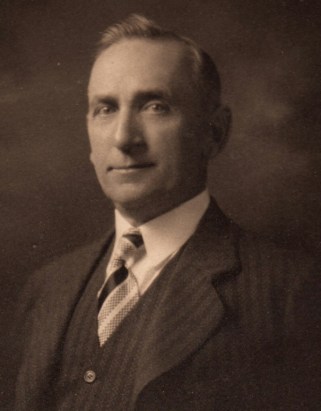
a-will-jrIn honor of our 150th anniversary in 2017 we are taking a look back at bank history and the people who have helped to shape our bank into the successful, secure institution that it is today. Read on to learn about one of our former presidents!

Aaron Will Jr. served as the second president of Vinton County National Bank, taking the reigns after the death of his uncle Daniel in 1924. While Aaron’s leadership of the bank lasted just fourteen years, his legacy is extraordinary.

Aaron Will ushered in a period of rebirth and progress, while strengthening his bank’s reputation as one of the most secure in the state. He boldly tore down the original bank building, replacing it with a beautiful new brick and marble building meant to impress the customer and to stand out in downtown McArthur. He launched the first organized marketing campaign for the bank, aggressively and consistently informing the public of the strength of his bank, the experience of his employees and the variety of the products offered.

Aaron is also remembered for hiring the bank’s first female employee, years before many of his competitors made room for women in banking. Perhaps most importantly, he navigated the bank safely through the Great Depression, exiting the Depression years stronger and more effective than ever.

Born in McArthur on May 22, 1872, Aaron was the son of Jacob S. and Rebecca Davis Will. He graduated from McArthur High School at the age of eighteen in 1890 and soon began working for the bank. Aaron was elected cashier of the bank the following year and worked as a banker for the next 48 years.

Aaron was one of the organizers of the McArthur Brick Company and was chairman of its first meeting in 1905. He was elected Treasurer and Director of this company, serving in this capacity until his death.

He is said to have taken much interest in civic affairs, supporting anything that would better the community. He was a founding member of the McArthur Rotary Club, belonged to the McArthur Episcopal Church and belonged to the Knights of Pythias. He was selected as alternate delegate to the Republican National Convention in 1928 and Delegate in 1932 but was unable to attend because of ill health. He was again selected alternate in 1936.

Aaron died of Chronic Myocarditis on Apr. 13, 1938 at the age of 65. He left behind his wife Mary B. Will and children Mary Will Pilcher, Jean Will and Robert B. Will. His son Robert and grandson Bob Will would later follow in his footsteps to lead the bank.

Aaron’s impact continues to be felt in our 150th year as we continue to strive for the same strength and stability that Aaron insisted on throughout his career.

Learn more about our 150th year here or about our founding president here.